
We often tend to think of repetition as the key to mastering any skill. In fact, practice becomes powerful when it feels like the real deal. This is why “Practice does not make perfect, only perfect practice makes perfect” is such a well-known saying, and in a way, it’s true.
Things are no different in the world of sport. In baseball, this means stepping into game-like situations to sharpen key skills. With the right equipment like pitching mounds, portable goals, batting cages and screens, you can recreate the rhythm of the game. This is how practice becomes perfect, when every swing, throw and catch feels like the real thing.
Portable Pitching Mounds
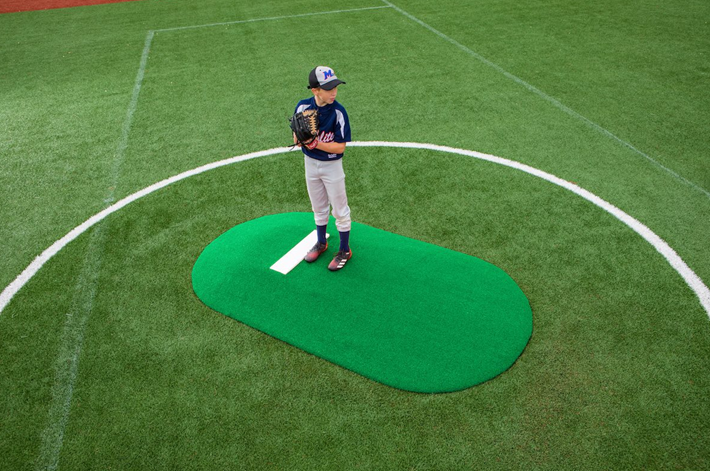
Baseball pitching is an art that requires precision, practice and the right gear, like pitching mounds. These tools replicate the raised surface used in an actual game. Training on these mounds allows pitchers to refine their leg drive, arm angle and follow-through just as they would in an actual game. Players need training that mirrors real game conditions, making baseball mounds an invaluable asset for players, coaches and facilities alike.
While traditional, permanent mounds are common on fields, a portable baseball mound offers flexibility. It can adapt to different surfaces, letting players train anywhere without sacrificing the realistic feel of a regulation mound. Being lightweight and easy to transport, you can use the same mound on different fields, instead of building and maintaining multiple dirt mounds. For coaches, facilities and players alike, portable baseball mounds provide consistent surfaces, year-round usability and easier maintenance.
Compared to traditional dirt mounds, they’re also easy to maintain. Developing and repairing a dirt mound season after season is costly, and it can lead to uneven surfaces that affect training accuracy and even pose safety risks. However, with portable mounds, you won’t have these issues. Plus, a portable baseball mound quickly pays for itself after a couple of seasons. The money saved on maintenance and repairs often matches or even exceeds the initial cost.
Batting Cages
If portable pitching mounds are for pitchers to refine their throws, then batting cages are for hitters to perfect their swings. These netted enclosures are designed for hitters to develop crucial skills, adapt to game-like scenarios and refine techniques for competitive play in a controlled, safe environment.
Typically rectangular, this type of baseball training equipment allows players to focus on their swings without the need to chase balls. Thanks to their cage-like appearance, these nets also protect players from stray balls. When it comes to buying batting cages that will help you create realistic game conditions, there are a few key things to keep in mind. Look for durable, weather-resistant netting and a sturdy frame like steel or fiberglass that can handle countless hits.
Portability is another aspect, with some cages designed for easy setup and takedown, while others are built to stay put. Heavier, more permanent cages offer maximum durability, whereas portable options provide convenience without breaking the bank. Design-wise, batting cages can be found in different styles. Freestanding batting cages are standalone structures supported by metal poles or frames covered with a netting enclosure.
They are a good option if you’re looking for a cost-effective and adaptable gear. In-ground batting cages, on the other hand, are permanently integrated into the ground using poles or frames anchored with concrete footings. They are most suitable for advanced players or team practices in dedicated training spaces.
Next, there are also attached batting cages connected to an existing structure, such as a garage, barn, or shed. These cages are most suitable for backyards with limited space. And finally, there are portable batting cages. These lightweight, mobile structures can be set up and taken down quickly, making them ideal for backyards, parks, or training fields.
Pitching Machines
To make practice even more realistic, you can add other essentials, like pitching machines. These machines replicate what you’d face in a real match. They can vary speeds and throw different pitch types like outswing, inswing, off-spin and leg-spin. The more a bowling machine can mimic the pace, swing and bounce of an actual bowler, the more match-ready you’ll be, so make sure to choose a reliable and responsive model. This is a step closer to making every practice session count.
Again, portability matters when recreating game-like scenarios. You’re likely to practice in different settings, from nets and fields to indoor halls and backyards, so a pitching machine shouldn’t be heavy but portable and easy to move without needing extra hands or breaking your back.
Also, a sturdy, well-built model is more likely to stand up to long hours of practice, harsh outdoor conditions and repeated use without showing signs of strain. Therefore, pick a durable pitching machine with reinforced frames, robust wheels and solid feeders. Other features like metal supports or sturdy plastic reinforcements can prevent bending, wobbling or tipping.