
Descender is an essential piece of climbing gear, the purpose of which is to control the descent, but none of this would be possible without the use of climbing quickdraws.
Well, these tools are very much needed to securely connect the rope to protection, prevent dangerous falls and reduce rope drag, especially on longer routes. When searching for the right ones, you should know that there are three important things to take into account to make the right choice: carabiner gates, sling length, and quantity.
Types of Carabiner Gates
When it comes to choosing the essential and easy-to-use quickdraws, you shouldn’t forget about carabiner gates. Generally speaking, there are three types of carabiner gates.
Straight-Gate Carabiners
As the name suggests, these pieces of gear have a solid straight gate from the pivot point to the end.
Bent-Gate Carabiners
The bent-gate carabiners have a concave gate that makes it easier to clip a rope. This is the main reason why they are mainly used for the rope-end of quickdraws.
An important thing you should know about straight and bent gate carabiners is that they can also be keylock carabiners, featuring a smooth notch, keeping the carabiner from hooking and catching on your harness gear loop, bolt hanger, etc.
Wiregate Carabiners
These carabiners feature a loop of stainless-steel wire for a gate. The wire loop has its own spring mechanism as it pivots, and as a result it decreases the overall weight. This eliminates the need for the use of some extra parts for easier use. These gates won’t vibrate or open in case of a fall, and they are less likely to freeze in cold temperatures, making them the perfect option when thinking about going ice climbing.
Sling Length
Also known as a dogbone, the sling length of these climbing pieces of gear is as important as their carabiner gates. The longer the sling, the better, as they seem more effective at reducing rope drag. Just keep in mind that they are heavier and bulkier in comparison to the shorter sling length.
- The short sling length usually varies between 10 and 15 cm, and they are mainly used when the route is relatively straight and there’s no rope drag.
- The medium sling length varies from somewhere between 17 and 25 cm, and they are perfect for reducing rope drag. The medium-sized slings are perfect for irregular routes and for longer ones.
- The long sling lengths are around 30 cm, and they’re perfect for long pitches. They’re the ideal option for those who prefer trad climbing.
Quantity – How Many Is Enough?
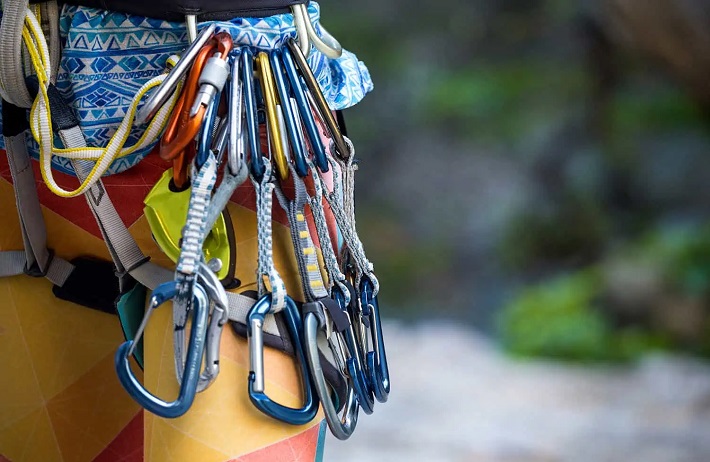
Once you get familiar with all the essential quick draws for climbing, you probably ask yourself, ‘How many quickdraws should I have?’, ‘How many is enough?!’ And while no one can give you an exact answer, the truth is that you’ll probably need around 12 – 16 of them.
According to frequent climbers, a set of 12 different quick draws is enough for straight routes. However, for longer routes, you should take no less than 16 in order to stay on the safe side. It would be great if you carry a few more ‘draws with you, just in case some get damaged.
Some Other Considerations
Sling Material
Speaking of slings, an important thing to have in mind when searching for the right length is the material, as this can affect the overall quickdraw weight. Generally speaking, slings are mainly made from polyester, nylon, ultra-high-molecular-weight (UHMW) polyethylene or a combination of these materials.
When comparing them separately, it seems that those made from UHMW are stronger than those made from polyester and pure nylon. They’re also lighter and narrower, so if their weight matters to you, then you should certainly consider the idea of investing in UHMW slings.
Carabiner Gate Opening
The carabiner gate opening refers to the fact how wide the carabiner’s gate can open. This also refers to the depth and the shape of the carabiner’s bottom, just below the gate. That being said, the smaller the carabiner, the less space it has, which may lead to your finger getting stuck between the carabiner’s body and the gate.
On the other hand, a too-big and deep gate opening makes it difficult for the carabiner to clip. That’s why you should stick to the ones that make clipping the rope fast and easy, without facing any difficulties. Generally speaking, the smaller carabiners are too small and harder to clip, and the larger ones are bulkier and also difficult to clip.
Ideally, you should choose a medium-sized carabiner, or one that’s easy to work with. That’s why it’s of vital importance to test them first, before usage. One thing is for sure, regardless of the type and number of ‘draws you choose or the type and size of sling, what matters the most is choosing ones that won’t compromise their quality and your safety.