In hunting, success often depends on what you can see before you ever take a step. The human eye is powerful, but it has limits. Especially in dense terrain, low light, or across long distances. That’s where quality optics come in. Experienced hunters often follow a simple principle: scout with your eyes, not your feet. The more you rely on optics, the less you disturb your environment. This means fewer spooked animals, more efficient glassing, and ultimately, better opportunities in the field.
But with so many models and specifications available, choosing the right hunting binoculars can feel overwhelming. Understanding how they work can make all the difference.
Decoding the Numbers (8×42 vs. 10×42 vs. 12×50)
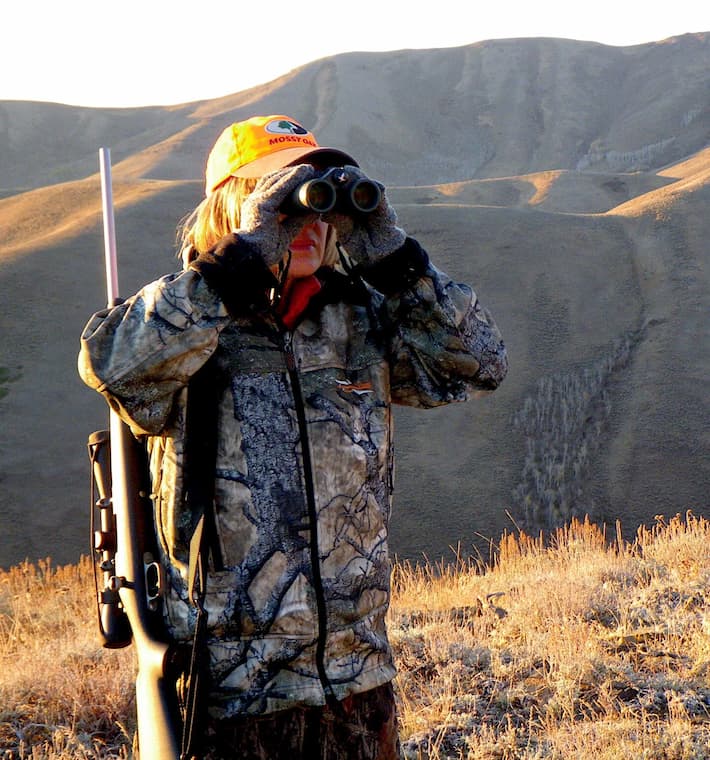
A reliable hunting binocular allows you to spot movement, identify game, and assess terrain in ways the naked eye simply can’t. If you’ve ever looked at binocular specs, you’ve likely seen numbers like 8×42 or 10×42. These numbers are more than just labels.
They define how the binocular performs. The first number refers to magnification. For example, 8x means the image appears eight times closer than with the naked eye. Higher magnification, like 10x or 12x, brings distant objects even closer but can also make the image less stable without support.
The second number refers to the objective lens diameter. A 42mm lens allows more light to enter than a 32mm lens, resulting in a brighter image, especially important during dawn and dusk.
An 8×42 is often considered the best all-around option. It provides a stable image, a wide field of view, and good low-light performance. A 10×42 offers more detail at longer distances but requires steadier hands. A 12×50 pushes magnification further and gathers more light, but it’s typically heavier and better suited for open terrain or use with a tripod. Choosing the right combination depends on your hunting environment and personal preference.
Optical Quality: Beyond the Numbers
While magnification and lens size are important, true performance comes from the quality of the optics themselves. Glass type plays a major role. ED (Extra-low Dispersion) glass reduces colour fringing and improves clarity, especially when viewing high-contrast scenes like an animal against a bright sky. HD (High Definition) glass is another term often used to describe enhanced clarity and sharpness.
Lens coatings are equally critical. Fully Multi-Coated (FMC) optics ensure that all lens surfaces are treated to maximize light transmission and reduce glare. This results in brighter, sharper images with better contrast. For binoculars that use roof prism systems, phase correction coatings are essential. These coatings improve image resolution and clarity by correcting phase shifts in light waves as they pass through the prisms.
Dielectric coatings further enhance performance by increasing light reflectivity within the prism system. The result is a brighter image. Particularly noticeable in low-light conditions. When browsing hunting binoculars for sale, these optical features often separate entry-level models from premium options.
Prism Systems: Roof vs. Porro
Binoculars typically use one of two prism designs: roof or porro. Roof prism binoculars are the modern standard. They have a straight, streamlined design that is compact, durable, and easy to handle. Their internal alignment makes them more resistant to impacts and environmental stress, which is why they’re preferred by most hunters.
Porro prism binoculars, on the other hand, have a more traditional, offset design. They often provide excellent depth perception and a slightly wider field of view. They are bulkier and less rugged, making them less practical for demanding outdoor conditions. For most hunting scenarios, roof prism binoculars strike the best balance between performance and portability.
Field Performance & Durability
Hunting environments can be unpredictable, so your binoculars need to perform reliably in all conditions. Gas purging is one of the most important features for outdoor use. Binoculars are typically filled with nitrogen or argon gas to prevent internal fogging. This ensures a clear vision even when moving between temperature extremes.
The exterior design also matters. Rubberized armour coatings provide a secure grip and help dampen noise – an often overlooked advantage when moving through quiet terrain. They also protect the binoculars from drops and impacts. The chassis material affects both weight and durability. Magnesium frames are lightweight and strong, making them ideal for long hunts. Aluminium offers solid durability at a slightly higher weight, while polycarbonate is a more budget-friendly option.
Eye relief is another key consideration, especially for hunters who wear glasses or sunglasses. Adequate eye relief ensures you can see the full field of view without removing your eyewear, which can be crucial in fast-moving situations. A well-built hunting binocular should feel solid in your hands, perform consistently, and withstand the rigours of the field.
The Final Inspection
Choosing the right binoculars goes beyond reading specs. It’s about how they feel and perform in real-world conditions. Whenever possible, try before you buy. Pay attention to ergonomics, weight, and how smoothly the focus wheel operates. A fast, precise focus can make a big difference when tracking moving games.
In the end, the best advice is simple: buy the best glass you can afford. Quality optics could last long-term, often outlasting multiple seasons of other gear and accessories. With the right pair of binoculars, you’ll not only see more, but you’ll hunt smarter, move less, and experience the field in a whole new way.