
EcoBoost engines are Ford’s alternative to bigger aspirated V6 and V8 powerplants traditionally powering models like the Mustang, F-150, Ranger and Explorer. Downsizing though hasn’t come at the cost of performance. The direct-injection and turbocharged setup in both 4 and 6-cylinder engines provides truckloads of low-end torque, considerably lower fuel use, more compact footprints and lower weight for a balanced mix of versatility and everyday driving performance.
The 2.3 and 3.5-litre engines have now become mainstream options in best-selling cars. Still, engineers have left space for improvements, with aftermarket performance EcoBoost additions like intercoolers, exhaust systems and cold intakes further bettering power delivery while ensuring lower maintenance needs. If you’re upgrading or tuning a Mustang, F-150 or any other Blue Oval model fitted with an EcoBoost engine, here are the top 3 parts worth your cash.
Consider an Aftermarket Cold Air Intake
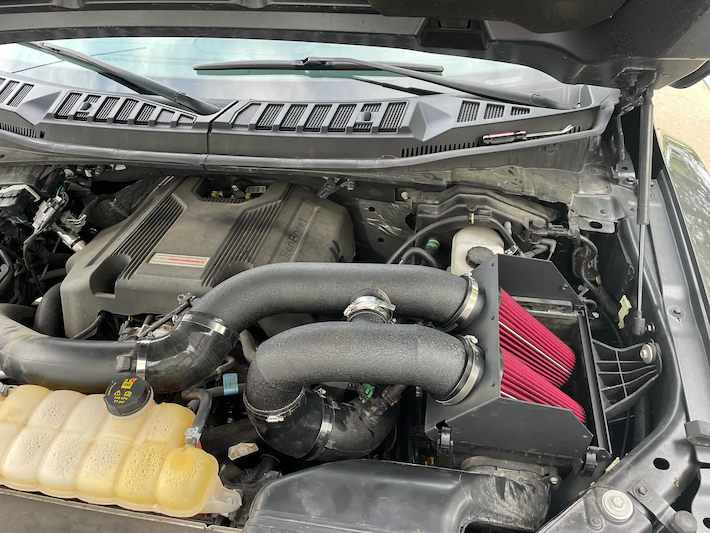
Stock intakes in early models were known to cause a few unwanted issues, ranging form carbon buildup in the intake valves, condensation in the intercooler, and loss of boost pressure due to cracked intake plumbing. This cut power, stalled engines and lead to costly repairs. While Ford revised the intake design in subsequent models, going with an aftermarket cold intake solves maintenance issues while bringing a clean set or performance benefits.
With wider piping (in straighter layouts), filters and airboxes located lower, and more durable metal plumbing to keep intake air cool, an aftermarket cold intake provides improved combustion with higher oxygen volumes, better filtering with larger cotton gauze cone filters, and reduced heat soak to keep power delivery consistent no matter the engine load.
Benefits when driving are the more instant throttle response, a deeper, throatier engine sound, and up to 20 horses of additional power for improved acceleration and overtaking. The engineered design also warrants lower maintenance, especially with oiled filters requiring fewer changes.
Pair Intakes with a Decently Capable Performance Exhaust
More air in, means more air out. Cold air intakes are part of the upgrade story, often requiring matching exhaust piping to ensure cleaner combustion and removal of spent gases. For the turbocharged EcoBoost you’ll be looking at revised downpipes to draw spent gases out the combustion chamber faster, ensuring steady ignition and power cycles. New downpipes in wider stainless steel are also built to a higher standard, capable of handling higher heat without succumbing to metal fatigue. Moreover, they aid turbo spooling with balanced backpressure for a more responsive engine when the turbines kick in.
Choose catted piping for street use and when meeting noise and emissions regulations, or cat-less downpipes for track use. Combine this with wider cat-back piping, and revised muffler and resonator layouts (in dual or single pipe configurations) for consistent airflow out the tips. Estimates for a full turbo-back system are 10 percent of overall power, or roughly 30 more horsepower for the 2.3L in the Mustang or 40-odd horses in the larger 6-cylinder 3.5 commonly seen in the F-150. This translates to better acceleration from a standstill, more toque when hauling, and an exhaust note that comes dangerously close to the aggressive sound in the aspirated 5-liter V8s.
Manage Heat with Larger-Core Intercoolers
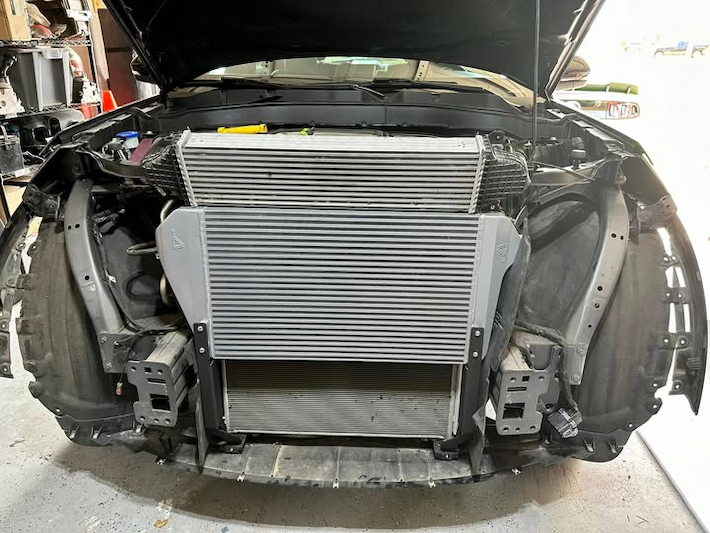
Intercoolers in early EcoBoost engines were the main shortcoming, often responsible for heat soak, higher intake temperatures and multiple performance and maintenance headaches. As mentioned, the inadequately sized cores lead to moisture buildup and misfires, and the plastic end-tanks were known to rupture under pressure, restricting turbo boost and ultimately, performance.
If you’re boosting power with air intakes and aftermarket exhausts, then better-built intercoolers with larger cores are the next performance EcoBoost parts on your shopping list. These provide better cooling efficiency of compressed air entering the turbo, meaning significantly lower heat soak, a more responsive throttle, and consistent power regardless of outside temperatures or engine loads. Choose between front-mounted air-to-liquid intercoolers in a bar-and-plate design for superior cooling capacity and increased durability, ideal for track use. Or go with air-to-air intercoolers for consistent performance in street applications. The latter are offered in front, top and side-mount varieties to suit engine bay space and layouts in different vehicles carrying an EcoBoost badge.
Pulling Out All Stops
Air intakes, intercoolers and exhausts are usually the first parts to see a complete makeover. This generally coincides with stage 1, or initial stage 2 tuning (of 3 overall). Here, the aim is to optimize airflow in and out of the engine, while maintaining sane temperatures. And provide incremental power and torque boosts with each addition.
For serious tuning, also consider other Ford EcoBoost performance upgrades. Go with blow-off valves to maintain boost pressures in tuned engines and protect the turbo. The parts ensure turbo spooling efficiency and reduced turbo lag, noticeable during gear shifts. To cut the jolty feel at lower engine loads, install a throttle body spacer. This helps with fuel atomization for cleaner burns and provides slight improvements to fuel economy. And for handling upgrades, tweak the suspension with additions like coilovers, lowering springs or air suspension, and get more of the newfound power down to the wheels.